RAG vs Memory: What Is the Actual Difference?
RAG and memory both fetch text and put it in the prompt, so they get mixed up constantly. They solve different problems: one gives an agent knowledge, the other gives it a history with a specific user.
What RAG actually solves
RAG, short for retrieval-augmented generation, exists because a model only knows what it saw in training. It cannot cite your internal policies, the prices you changed this week, or a document written yesterday. RAG closes that gap. You keep a corpus of documents, and when a question comes in, you search the corpus for the passages most relevant to it and paste them into the prompt. The model then answers from that fetched text instead of guessing from training alone.
What matters is the kind of information RAG handles: knowledge that lives outside the model and is mostly shared. A product manual, a legal handbook, a company wiki. Everyone who asks "what is the refund window?" should get an answer grounded in the same policy document. The corpus is authored somewhere else, updated when its source changes, and read far more often than it is written.
- RAG grounds answers in an external document corpus the model never trained on.
- That knowledge is shared: the same documents serve every user.
What memory actually solves
Memory handles a different kind of information: what has happened between this agent and this user. The refund policy is knowledge. The fact that this customer already asked for a refund twice, is on the Pro plan, and moved to Mumbai last month is memory. None of that lives in a document. The interaction itself produces it, and it belongs to one user.
That changes the work. Memory has to catch a fact worth keeping as it goes by in conversation, store it so it outlives the session, bring back only the facts that matter for the current moment, and revise them when they change. A user who moved should stop being remembered at the old address. Information like this is written constantly, read personally, and tied to time.
- Memory tracks what happens with one specific user, produced by the interaction rather than authored elsewhere.
- It is written constantly, personal, and changes over time.
Where they overlap
The two blur together because they share machinery. Both usually turn text into embeddings, store the vectors, and at query time pull back the closest matches. Look only at that retrieval step and RAG and memory are the same operation: embed, search, inject. The shared step is real, and it is why a single vector database can serve both.
The overlap stops there. Retrieval is a tool each of them uses, not the thing either of them is. Mistaking the vector search for the whole system is exactly what leads people to call a pile of embedded chat logs a memory system, which it is not, for reasons the next section makes concrete.
- RAG and memory share one step: embed, search, inject.
- Shared machinery is not a shared purpose.
Where they actually differ
Past the retrieval step, the differences are sharp, and each one changes how you build the system.
Start with the source of truth. RAG reads from documents someone authored elsewhere. Memory has no such documents, so it has to create its own records from the interactions as they happen.
Then direction and change. A RAG corpus is mostly read, and it changes when the underlying document changes: you re-index and move on. Memory is written on almost every turn, and its facts change because the user changes. Even the word "stale" splits in two. A stale document needs re-indexing. A stale memory needs the old fact retired and a new one put in its place.
Finally scope and time. RAG knowledge is shared and mostly timeless: the refund policy is the refund policy. Memory is personal and temporal. What is true matters, and so does when it was true, so the agent can tell where the user lives now apart from where they lived when a project began.
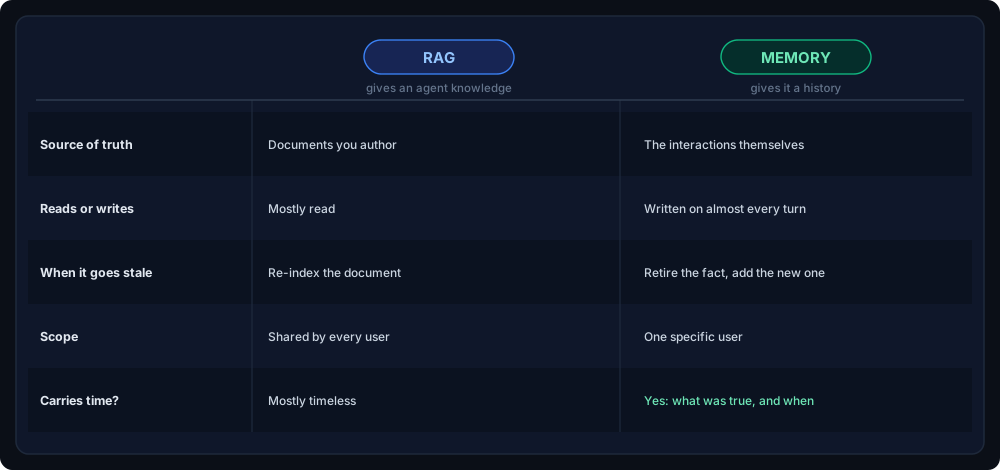
- RAG reads shared, mostly static documents; memory writes personal facts that keep changing.
- Memory carries time: what was true and when, not only what is true now.
When an agent needs both
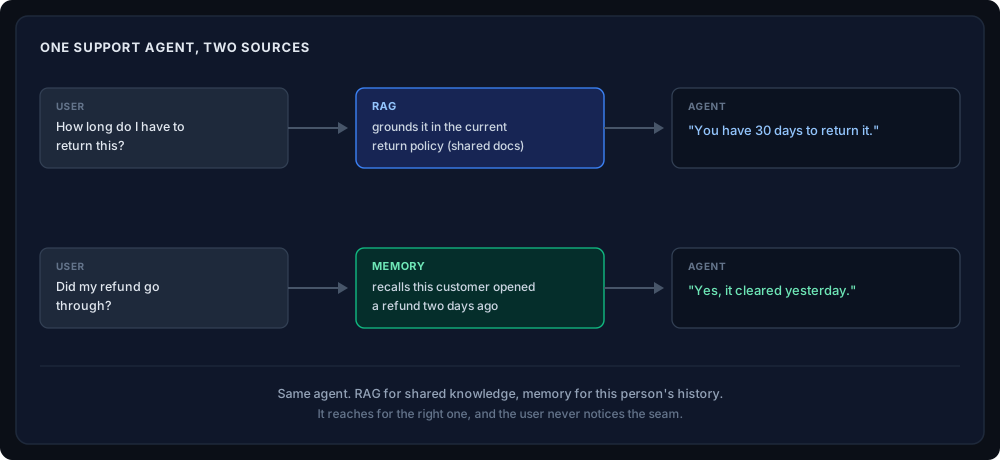
Most real agents need both, and the two do not compete. Picture a support agent. Asked "how long do I have to return this?", it uses RAG to ground the answer in the current return policy. Asked "did my refund go through?", it uses memory to recall that this customer opened a refund two days ago. One question is about shared knowledge, the other about this person's history. A good agent reaches for the right source and the user never notices the seam.
The catch is that the memory half is the harder, less finished one. RAG is a settled pattern with mature tooling. Memory still asks you to extract facts, keep them current, and reason about when they were true, and most stacks bolt that on by hand. Suprflo builds that half as a real layer: a Postgres-native memory system that extracts, stores, retrieves, and updates facts over time, so an agent can hold both the manual and the relationship at once. If your agent already has RAG and still forgets the person it is talking to, memory is the piece it is missing.